Driveways and Access Routes That Hold Up
Gravel Services in Wartrace for driveway installation, material delivery, and grading across residential and commercial sites
Middle Tennessee's clay-heavy soil and seasonal rain create conditions where unprepared driveways turn to mud, rut under vehicle weight, and wash out along edges where water isn't directed properly. The Gravel Man delivers and installs gravel, rock, dirt, sand, and fill material throughout Wartrace for access roads, parking areas, farm lanes, construction entrances, and drainage projects. Proper grading and placement mean water runs off the surface instead of pooling in low spots, extending the life of the driveway and reducing the frequency of regrading.
Gravel services include material delivery by dump truck, spreading and leveling using grading equipment, and surface preparation that accounts for drainage slope and compaction needs. Material selection depends on the intended use—larger stone for heavy equipment access, finer gravel for residential driveways, and fill dirt for leveling before gravel placement.
Request a material estimate based on your driveway length, intended traffic load, and current surface condition.
What You Notice Once Gravel Installation Is Complete
Gravel installation starts with assessing the existing surface, removing soft spots or organic material that won't compact properly, and shaping the base so water flows toward ditches or culverts rather than eroding the driveway center. Professional hauling equipment delivers material directly to the site, and experienced operators spread it evenly to create a crowned surface that sheds water.
After installation, your driveway will have a firm, stable surface that supports vehicle weight without sinking, defined edges that prevent gravel from migrating into grass or drainage ditches, and a crowned profile that directs rainwater off the surface instead of allowing ruts to form down the center. Properly installed gravel resists washout during storms and maintains usability through wet seasons when unimproved dirt roads become impassable.
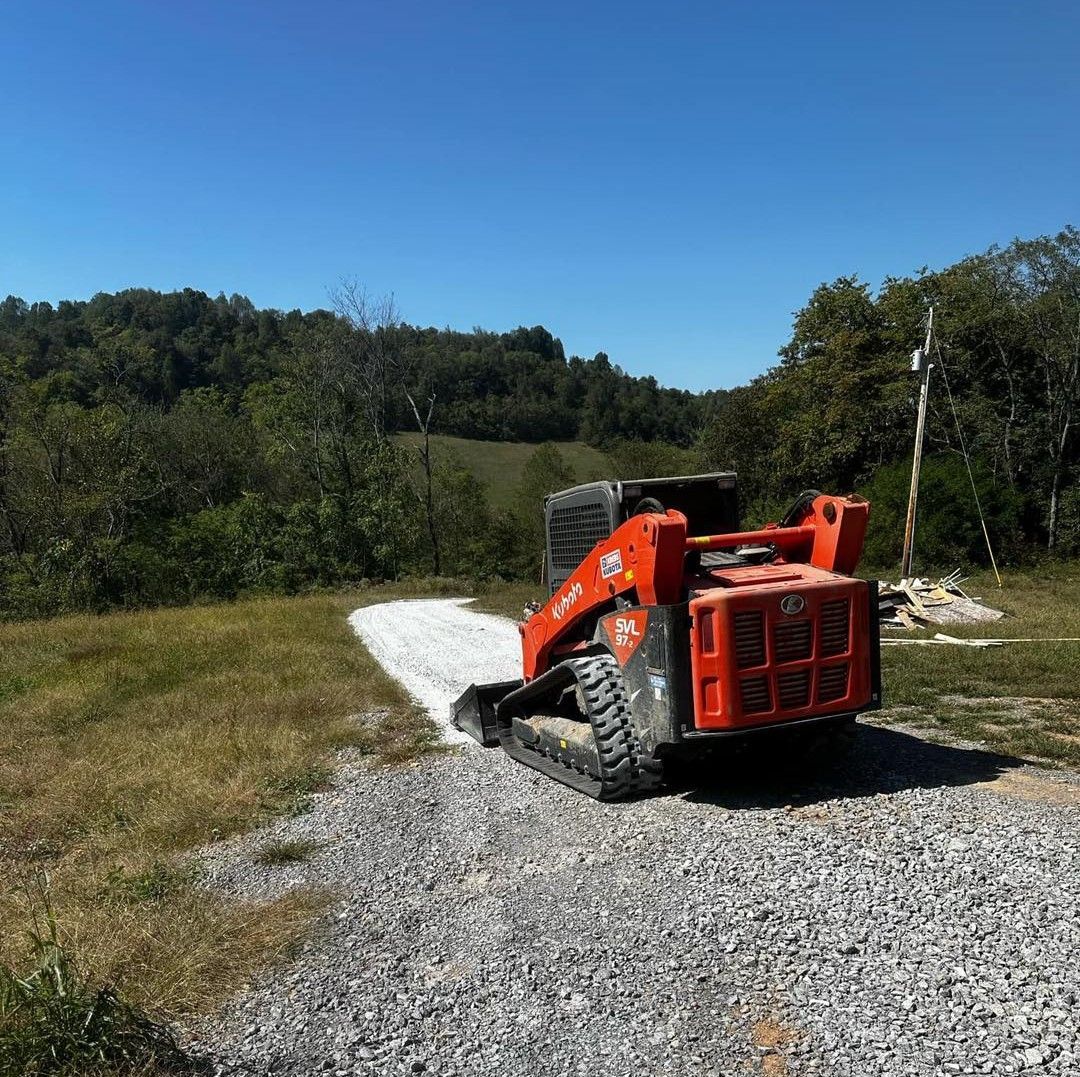
Gravel projects are often paired with excavation for driveway base preparation, dozer services for fine grading, and skid loader work for spreading material in tight or irregular spaces. Dump truck services also support large hauling needs for construction sites and commercial properties requiring bulk material delivery.
Answers to Frequent Gravel Questions
Property owners installing or repairing driveways typically want to know about material types, delivery logistics, and how grading affects long-term performance.
What type of gravel works best for residential driveways?
Crushed limestone or graded stone between three-quarter inch and two inches provides good compaction and surface stability for typical passenger vehicles and light trucks.
How much gravel is needed for a driveway?
Material volume depends on driveway length, width, and desired depth—a standard residential driveway typically requires three to four inches of compacted gravel, which translates to multiple truckloads for longer routes.
Why does gravel wash away in some driveways but not others?
Driveways without proper crown or side drainage allow water to flow down the center, picking up and displacing gravel, while correctly graded surfaces shed water before it gains enough velocity to erode material.
Can gravel be installed over an existing dirt driveway?
Yes, but soft spots and organic material should be excavated first so the gravel base compacts evenly rather than sinking into unstable ground underneath.
How is gravel delivered and spread on-site in Wartrace?
Material arrives by dump truck and is placed in staged piles or spread directly, then graded using skid loaders or dozers to create the final surface profile and drainage slope.
The Gravel Man handles material delivery, grading, and driveway preparation across Wartrace and Middle Tennessee using equipment suited to rural properties and construction sites. Schedule a site visit to review your driveway layout and determine material requirements.