Stopping Pavement Deterioration Before Replacement Is Needed
Asphalt Repair in Wartrace for damaged driveways, parking areas, and paved access surfaces showing cracks or erosion
Small cracks in asphalt expand rapidly once water infiltrates the base layer, and freeze-thaw cycles in Middle Tennessee accelerate the process by forcing cracks wider each winter. The Gravel Man addresses asphalt damage through patching and surface correction that restores structural integrity before deterioration requires full replacement. Repair work focuses on driveways, equipment access areas, and parking surfaces where vehicle traffic and weather exposure have created uneven sections, potholes, or edge failures.
Asphalt repair corrects damaged sections by removing failed material, stabilizing the base layer, and applying new asphalt to restore a level, durable surface. Grading experience ensures proper base preparation before patching material is placed, which prevents repaired areas from settling or cracking again within a short timeframe.
Arrange an evaluation to assess current pavement condition and identify repair priorities before damage spreads.
How Asphalt Repair Addresses Pavement Damage
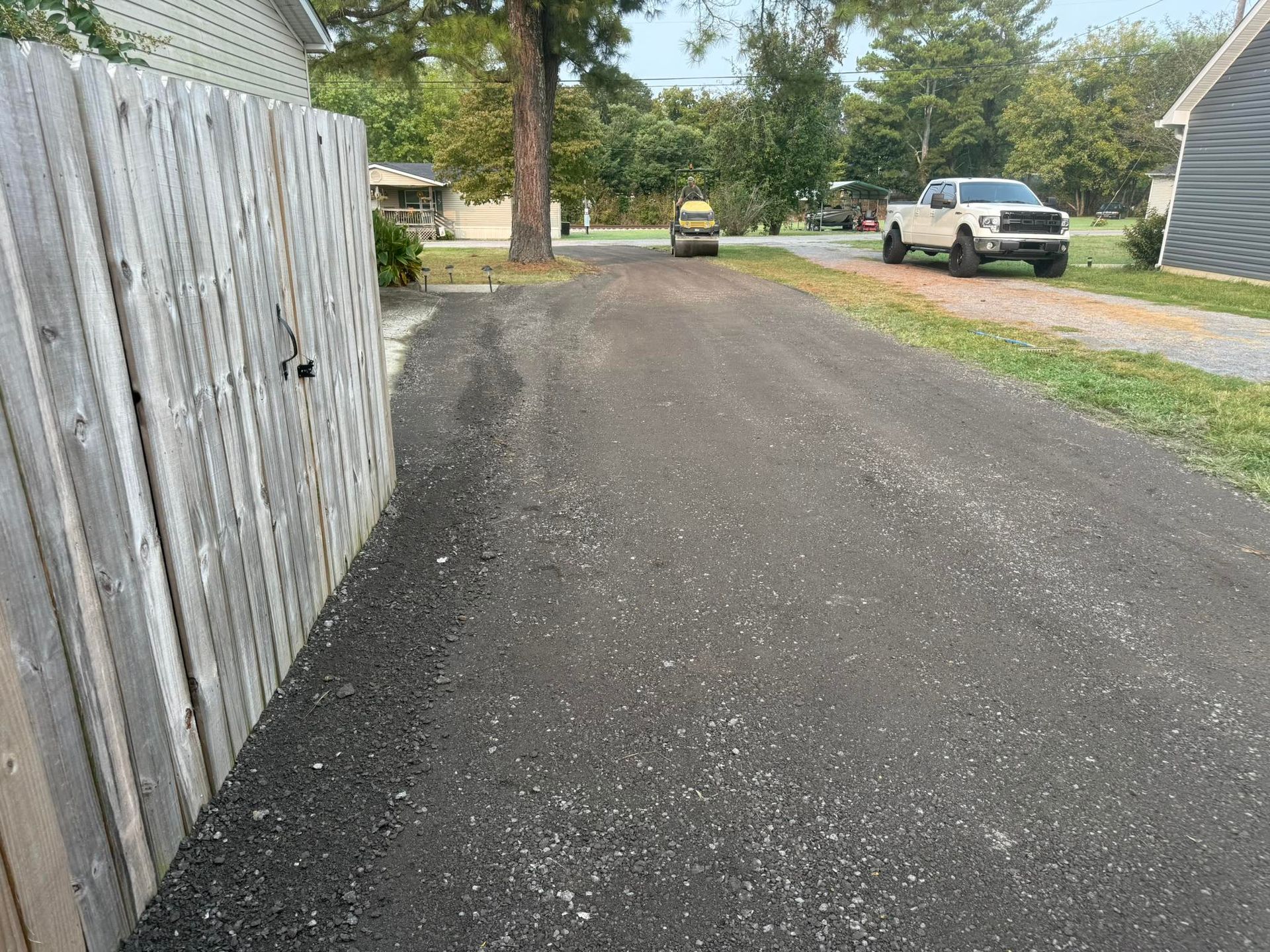
Repair work begins by identifying why pavement failed in specific areas—whether from poor drainage that saturates the base, heavy vehicle loads that exceed original design, or edge erosion caused by insufficient support along borders. Damaged asphalt is removed to expose the base layer, which is inspected for stability and regraded if settling has occurred. New asphalt is compacted into place to bond with surrounding pavement and restore smooth vehicle passage.
After repair, you notice vehicles no longer jostle over potholes or uneven transitions, water drains across the surface instead of pooling in low spots, and edges remain intact without crumbling under tire pressure. The Gravel Man prepares damaged areas properly so repaired sections perform as well as surrounding pavement rather than failing again within months.
Asphalt repair does not address drainage problems that originate outside the paved area, so grading corrections or culvert installation may be required separately if water flow is undermining the pavement base. Repair is most effective when completed soon after damage appears, before water infiltration degrades the underlying support structure.
What Clients Often Want to Know
Asphalt repair questions typically concern when repair is preferable to replacement, how repairs hold up over time, and what preparation is required before patching.
What determines whether asphalt should be repaired or replaced?
Repair is appropriate when damage is localized to specific areas and the surrounding pavement remains structurally sound. Replacement is necessary when cracking is widespread, the base has failed across large sections, or the original pavement was installed without adequate base preparation.
How does base preparation affect repair longevity?
If the base layer beneath damaged asphalt has settled or washed out, simply adding new pavement on top will not prevent the same failure from recurring. Proper repair includes regrading and compacting the base so it supports the new asphalt without shifting.
When should asphalt repairs be scheduled to avoid weather delays?
Repairs are best completed during dry conditions when temperatures are above freezing, allowing asphalt to compact properly and bond with existing pavement. Wet or frozen ground prevents adequate compaction and reduces repair durability.
What maintenance extends asphalt life after repairs are completed?
Keeping drainage routes clear so water does not pool on the surface, sealing cracks before they widen, and avoiding heavy concentrated loads in weak areas all help repaired pavement last longer. Regular inspection after winter allows new damage to be caught early.
How are repaired areas integrated with existing pavement in Wartrace driveways?
Edges of repaired sections are cut cleanly and new asphalt is feathered into surrounding pavement to create smooth transitions. Proper compaction ensures repaired areas sit flush with existing surfaces rather than forming humps or depressions.
The Gravel Man assesses pavement condition and base stability before recommending repair scope and timing. Request a detailed inspection to review damage patterns and determine appropriate repair strategies for your paved surfaces.